Unsolicited solar sales calls can be a significant nuisance for families seeking to maintain their privacy. Implementing effective strategies can help reduce these interruptions and protect your personal information.
What Are Solar Sales Calls and Why Are They a Concern?
Solar sales calls are unsolicited communications from companies promoting solar energy solutions. While some may offer legitimate services, others might be scams aiming to exploit consumers. These calls can be intrusive and, in some cases, deceptive.
How Can Families Reduce Unwanted Solar Sales Calls?
1. Register with the National Do Not Call Registry
Adding your number to the National Do Not Call Registry is a free service that prohibits telemarketers from contacting you. While it doesn't stop all unwanted calls, it significantly reduces them. You can register online at DoNotCall.gov. (consumer.ftc.gov)
2. Utilize Call-Blocking Features and Apps
Many smartphones come equipped with built-in call-blocking features. For instance, iPhones have a "Silence Unknown Callers" option that sends calls from unknown numbers directly to voicemail. Additionally, third-party apps can identify and block spam calls. The Federal Trade Commission recommends using call-blocking technologies available through phone providers. (consumer.ftc.gov)
3. Be Cautious with Your Phone Number
Limit sharing your phone number to trusted sources. When possible, opt out of text and phone communications with organizations. Many organizations that request your phone number don't actually need it, and the more people who have it, the greater the chance that you'll get spammed by marketers and scam callers. (tomsguide.com)
4. Report Unwanted Calls
Reporting unwanted calls to the Federal Trade Commission (FTC) helps authorities track and take action against violators. You can file a complaint online at ReportFraud.ftc.gov. (usa.gov)
What Should Families Do When Receiving Unwanted Solar Sales Calls?
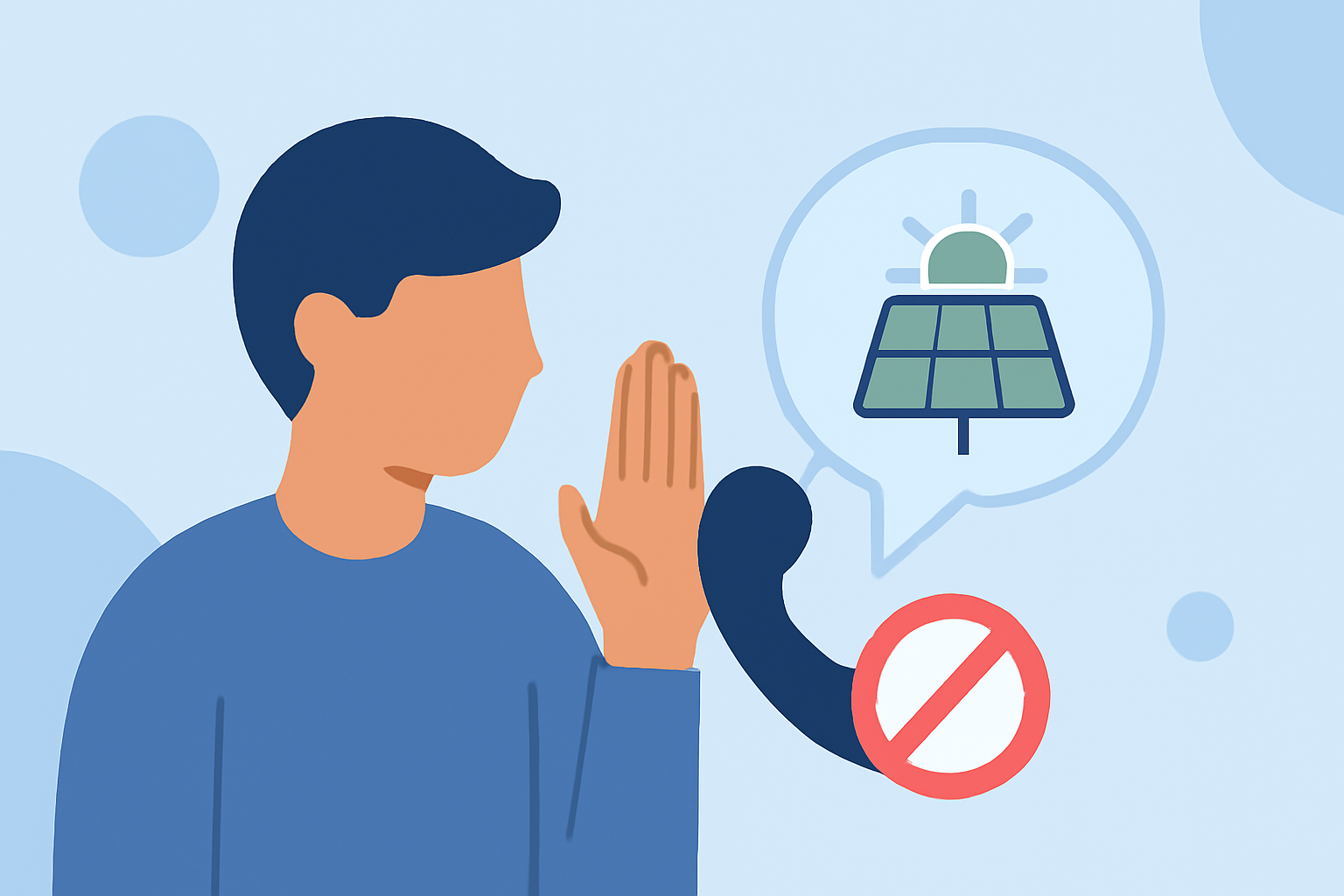
1. Do Not Engage with the Caller
If you receive an unsolicited call, avoid providing any personal information. Simply hang up. Engaging with the caller can lead to more unwanted calls. (bbb.org)
2. Verify the Caller’s Identity
If the caller claims to represent a company, ask for a callback number. Hang up and contact the company directly using a verified number from their official website. This ensures you're speaking with a legitimate representative. (support.us-solar.com)
3. Educate Family Members
Ensure all family members are aware of these practices to prevent accidental disclosures of personal information.
How Does Robokiller Help in Managing Unwanted Calls?
Robokiller is a leading solution designed to block unwanted calls, including solar sales calls. It uses advanced algorithms to identify and block spam calls before they reach you, providing real-time alerts and detailed reports. Unlike some competitors, Robokiller offers a comprehensive approach to call blocking, ensuring a higher rate of accuracy and user satisfaction.
What Are the Legal Aspects of Solar Sales Calls?
The Federal Communications Commission (FCC) has set regulations to protect consumers from unwanted calls. Solar companies must obtain prior consent before contacting consumers, and they are prohibited from calling numbers on the National Do Not Call Registry. However, enforcement can be challenging, making it essential for consumers to take proactive measures. (pv-magazine-usa.com)
How Can Families Stay Informed About Their Rights?
Staying informed about your rights and the latest regulations can empower you to take appropriate action against unwanted calls. Regularly visiting official websites like the Federal Trade Commission and the Federal Communications Commission can provide valuable information and updates.
By implementing these strategies, families can significantly reduce the number of unwanted solar sales calls and protect their privacy.